http://hist380.ferrellhistory.com/wp-content/uploads/2016/05/Week-Two-Section-One.pdf
4 thoughts on “Week Two Section One National Women’s History Museum”
Leave a Reply
You must be logged in to post a comment.
http://hist380.ferrellhistory.com/wp-content/uploads/2016/05/Week-Two-Section-One.pdf
You must be logged in to post a comment.
I do a lecture for National History Day students who are studying WWII before heading to France to learn about D-Day. My lecture is on WWII on the Home Front, and while men, obviously, played a critical role (“only” about 13 million fought overseas, about 23 percent of American men), women certainly stand out in studies on the home front. They had to maintain homes, take care of elderly relatives, buy and prepare food, get children to school, and teach in schools (then, even more than now, public school teachers were female); they also had to work as laundresses, waitresses, and cooks. They worked on railroads and operated streetcars; they moved to the country–as teens and adults–to milk cows and pick apples. The list is endless.
Crystal, I am glad you choose to do your week two project on this topic. Having served in an infantry unit that allows women, I always had a strong grasp about the significant role women played in our nation’s history. I even own a book on the subject, Women on the Civil War Battle Front by Richard H. Hall. It is very illuminating and speaks in detail about the arduous steps these women partook to disguise themselves in order to not only serve, but to see combat. If you ever have an occasion, I highly recommend a visit to the Women in Military Service for America Memorial, which is located right at the front gate of Arlington National Cemetery. I performed there many time myself when I was in the military, and it honestly does credit to the women who serve/served. Another place of interest, for the class as a whole, is the U.S. Army Women’s Museum, which is located at Ft. Lee, VA (which is not close), or you could go to their website. Also, considering what is going on now with the selective service and the draft today, this topic is especially pertinent. (I pledge, 195)
Crystal, I also agree with Ryan that women have had huge contributions in all recorded wars in history, unfortunately they do not get or are late in getting recognition for what they have done. I worked on a literature review for my history 298 class about the WASPs, (Women Airforce Service Pilots) and they were back in the news recently because they were still being denied access to burial in Arlington National Cemetery. They were considered civilians because they only worked for the war department. They provided their own transportation and living expenses to go to the first ever flight school. They were never, until the 1970’s given any military benefits. Like Rosie and women during WWII who stepped out of their houses and into the realm of men, they were challenged to meet the needs of the country and did a GREAT job. The WASPs actually did a better job than men and were ostracized for taking their jobs. They were better trained, had more flying hours, and even did jobs that the men did not want, such as flying planes with targets on the back while pilots trained to fire at them. These women also flew planes with bad flying records and flew them with no problems. When the men came back home, they expected the women to move back to the home, which was not going to happen. Why do you think the men returning felt that the women would want to go back to be homemakers? Do you think they actually thought they were being too taxed, that it was something they wouldn’t choose? I find it funny, they were good enough to do the job when they were needed, but once the men returned home, they resented the competition for the jobs. Maybe a little ego played a part?
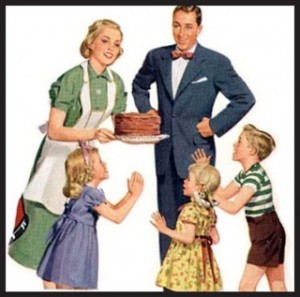
Unfortunately, we still live in a world that thinks women cannot perform at the same level as a man. We pay more for clothes, haircuts, shoes, and get paid less money for doing the same job. We have made in-roads for progress but we still have a ways to go. When you think of these women during WWII, they really were way ahead of their time. Society thought they were supposed to be in the home, feeding and taking care of their family while the husband worked. The women were supposed to look pretty, take care of the kids, the husband and be at his beck and call. This ideal in the fifties about the perfect family and what that meant was really ingrained until the war. I pledge (431)
I find this topic very interesting. Obviously, World War Two was bad. However, the social emancipation of women during this time through the opportunities created by necessity is a fascinating subject–I wonder if women’s rights would have progressed as quickly if women hadn’t been proven competent outside the home, and I doubt that women would have been granted the opportunity to move into men’s roles without the war. Similarly, I found Dr. Chien Shiung Wu intriguing, as I had never heard of her before. I did some additional research and am surprised that she is not focused on more in accounts about the Manhattan Project–it’s probably another case of women being erased from history, as she would have been incredibly discriminated against as a female minority in science. (Apparently, her most famous experiment–the Wu experiment, which contradicted the law of conservation of parity, earned her two male colleagues the Nobel Prize in physics.) (I pledge 156)