http://hist380.ferrellhistory.com/wp-content/uploads/2016/06/histweek3-2.pdf
2 thoughts on “The Ozzie and Harriet Show- Crystal Montgomery”
Leave a Reply
You must be logged in to post a comment.
http://hist380.ferrellhistory.com/wp-content/uploads/2016/06/histweek3-2.pdf
You must be logged in to post a comment.
Crystal,
I believe you created an informative summary about the Ozzie and Harriet Show because I picked out many details in your writing that I found throughout the readings for this week that portrayed what was happening in the 1950s. In “David Picks up the Tab,” you mention that Rick’s father, Ozzie, teases Rick about his taste in music. I wonder why Ozzie would allow his son to play music at their home that he disliked, when his friend’s parents would not allow it. Cohen states that “adults had long feared the polluting influences of raucous dance music” (Cohen, 264). Could this mean that some parents in the 1950s were more lenient than others? I am not too sure what to think about that.
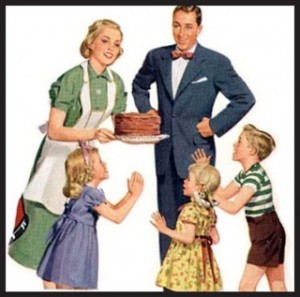
Overall, I think that your summary also provided a significant view to how some of the producers of television shows in the 1950s tried to instill the belief in their audiences that families in their shows were the ideal family. It makes me think of the Brady Bunch, where all the kids are portrayed as all-American, and polite to their elders.
(I Pledge, Word Count: 185)
Crystal, I did this assignment as well, and learned a great deal more than I thought I would. Being in my forties, and having a love of American history, I grew up on old movies. While I am aware of what the idea is behind the 1950s delinquent, I was not aware it was a problem of national concern. Cohen’s article was a fascinating read, as I actually remember the whole debate regarding the comic book issue, albeit this was in the 70s. Additionally, I would like to address Julia’s comment regarding her confusion about “Ricky playing his music at his house,” Cohen also states, “The postwar years, through the 1950s, [. . .] Adults poured their love, faith, and resources into the young, the hope of the future, but also dreaded their corruptibility and fragility [. . .] ” (254). So, yes, some parent’s were more trusting of their teenage children, as they recognized that a little rebellion is a part of growing up. While I concentrated on Father Knows Best, my observations were similar to your own. The “Anderson children,” were always polite and hung on the words and advice of their parents. (I pledge, 195)